Ceramic or Copper for Serving? Begin with the Food and the Moment
Ceramic or copper for serving? Choose a vessel by the dish’s shape, temperature and food-contact suitability, so the meal is easy to serve and care for.
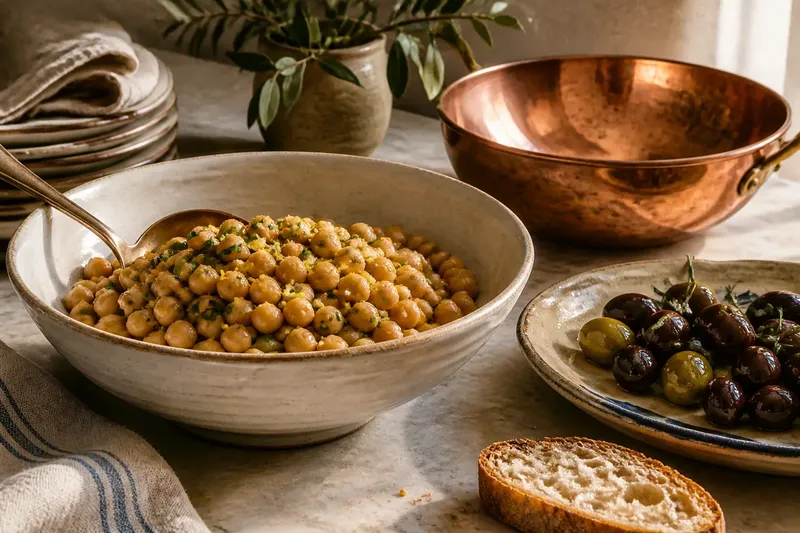
A bowl of warm chickpeas waits on the counter beside a glazed ceramic dish and a copper-coloured serving piece. Choosing ceramic or copper for serving starts with the food, but the object’s construction matters too: Italian kitchens and tables include many kinds of ceramics and metalwork, not one standard form or use.
Food and vessel
A substantial ceramic bowl gives beans, roasted vegetables or dressed salad room to settle. Its sides can contain a sauce, while a broad opening leaves space for a serving spoon. Glazes and shapes vary, so look at the particular piece rather than assuming every ceramic vessel has the same finish or handling needs.
Copper has a strong visual presence. A warm gleam can bring olives, almonds or sweets into focus against plain linen and everyday crockery. But “copper” describes appearance and material, not necessarily what touches the food: a serving piece may have a lining or a different construction. Its suitability depends on the actual item.
Shape is often more useful than material as a first distinction. A deep bowl contains saucy food; a shallow dish makes pieces arranged in a single layer easier to reach. Choose a rim and opening that accommodate the serving utensil, and leave enough room for guests to take food without disturbing the arrangement.
Italian forms and use
Italian tableware is not a single style. A painted ceramic serving dish, a plain glazed bowl and a metal vessel can each belong to different regional traditions, workshops and domestic habits. An object’s origin may add context, but it does not by itself tell you whether the piece is suitable for a particular food or meal.
For an imported piece, check the maker’s description, care instructions and any food-contact information supplied by the seller. Look for an explicit statement that the item is intended for serving food, and note any limits on hot, acidic or moist dishes. If that information is absent or unclear, treat the piece as decorative and use a known food-safe bowl instead.
For copper in particular, do not infer food-contact suitability from a shiny surface, a “copper” label or an Italian origin. If the maker does not explicitly identify the food-facing surface as suitable for the intended food and temperature, do not serve food directly in it. Transfer the food to ceramic or another vessel whose maker confirms the intended use.
Weight and handling
Ceramic ranges from light tableware to thick stoneware. A broad, heavy platter may stay settled while people serve themselves, yet feel awkward to carry when full. A smaller bowl may be easy to pass but leave little room for a spoon.
Copper pieces also vary in thickness, shape and construction. Lift the empty vessel as you would at the table, then consider how it will feel filled and held away from your body. If that seems awkward, leave it in place and bring the food over in a lighter bowl.
Handles, rims and bases influence comfort as much as material. A flared rim can be easier to grasp; a steady base helps when guests serve themselves. Consider the route from kitchen to table, including a narrow doorway, a crowded counter or glasses already set close together.
Colour and context
Ceramic finishes range from plain white and earthy glazes to saturated colours and painted patterns. Judge the food against the vessel, not just the empty piece: pale beans may recede on a light surface, while green herbs can show clearly against a darker glaze.
Copper reflects its surroundings, so its appearance shifts with the light, cloth and dishes nearby. That gleam can give a small shared snack a focal point. If the table already has patterned linen and colourful serving pieces, a quieter ceramic surface may let the meal feel less crowded.
Neither material carries a fixed cultural meaning on its own. The object’s form, decoration, maker and setting all shape how it reads. A useful choice respects that context without letting appearance override food-contact suitability or ease of service.
A supper in practice
Imagine you are setting out a casual supper with warm chickpeas dressed with lemon and herbs, bread and a small bowl of dry olives. You have a broad pale ceramic platter, a deep ceramic bowl and a copper-coloured dish whose maker’s label says it is decorative only. The chickpeas need a spoon and containment; the olives can be picked up by hand.
You put the chickpeas in the deep ceramic bowl, where the dressing stays contained and the spoon fits. You do not use the copper-coloured dish for olives, because its label rules out food contact; instead, you put them in the ceramic platter. The result is a simple arrangement with clear serving roles, though the olives lose the reflective accent the metal piece might have supplied. If the label had explicitly confirmed food contact for dry foods, that dish could be considered for the olives, subject to its other care directions.
Which vessel fits?
Can hot or acidic food go in copper?
Only if the maker explicitly confirms that the food-facing surface is suitable for that food and temperature. If the label is missing, unclear or limited to decorative use, serve the food in ceramic or another vessel confirmed for the purpose.
When is ceramic the easier choice?
A ceramic bowl often suits saucy food, spooned portions and dishes that need containment. Check the individual piece’s care guidance and make sure its shape leaves room for the utensil.
How can a shiny dish sit comfortably?
Pair it with plainer crockery or a simple cloth, and let the vessel have space rather than surrounding it with competing patterns. Keep the serving arrangement easy to reach, not so composed that guests hesitate to take food.
What should I check on an imported piece?
Read the maker’s or seller’s description for intended use, food-contact suitability and care limits; origin or appearance is not a substitute. If those details are unavailable, use the item decoratively and serve food in a vessel with clear food-use guidance.
Care after serving
Ceramic can chip when knocked against a hard surface, and some glazes need gentler cleaning than others. Copper may tarnish or be affected by food and cleaning products. Follow the instructions for the individual item, including any limits on washing, soaking or food contact, rather than applying one rule to every piece of a material.
During a meal, place delicate pieces away from the busiest edge, set a suitable spoon beside saucy food and leave room to put each dish down safely. These small choices help keep an imported serving object in use without making it the centre of attention.
A considered choice
For ceramic or copper serving, begin with the dish’s texture and temperature, then check shape, handling and the maker’s food-contact guidance. A ceramic bowl may contain a spooned dish; a copper piece belongs at the table only when its construction and stated use suit the food. The best choice may be familiar tableware already in your cupboard.
Before setting the table, place the empty vessel where it will be used and imagine the food inside it. Confirm that the food can touch its surface, the utensil fits and the dish is comfortable to handle. If any of those answers is uncertain, choose a clearly food-safe alternative and keep the other piece for decoration.